
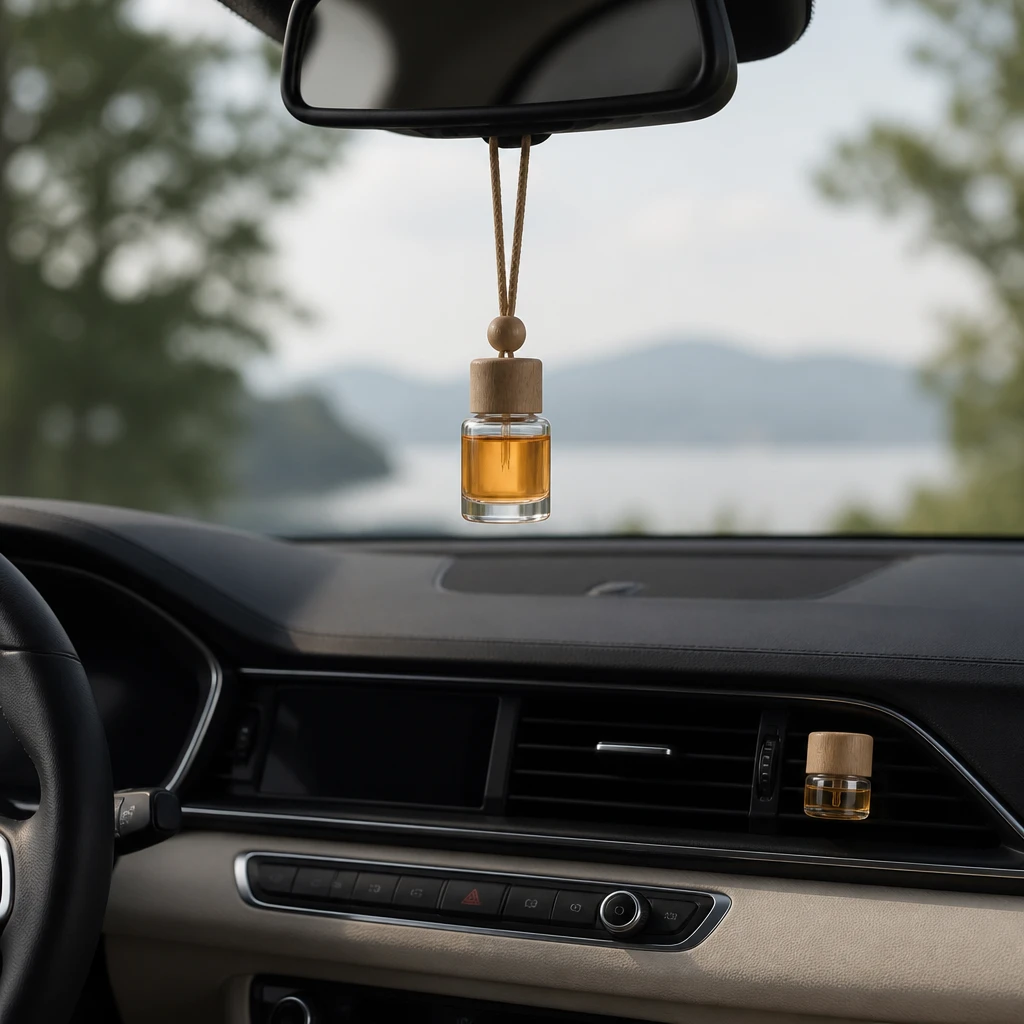
What determines the longevity of a car fragrance?First look at the diffusion technology, not just the lasting time.
When sourcing car fragrances as promotional items, the most common pitfall is to only look at the number of "how long it lasts". In fact, the lasting time is the result, and the diffusion technology is the cause. Different technical routes lead to completely different fragrance release curves, the degree of influence by the environment, and ultimately the user experience.
How paper-based controlled-release technology achieves stable diffusion
SOCELI custom paper car fragrances use paper-based controlled-release diffusion technology. Its core logic is: the fragrance is adsorbed in the fiber structure of the paper-based material, and slowly released outward through the capillary action of the material itself. This release process is physical, does not rely on external energy, and there is no issue of "one-time dumping."
The advantage of paper-based controlled release lies inthe relatively constant release rate.。 Fragrance molecules need to gradually migrate from the inside of the fiber to the surface before volatilizing. This path determines that it will not suddenly volatilize in large amounts at high temperatures like liquid aromatherapy. What does this mean for promotional product scenarios?
It means that every piece of aromatherapy you give to clients or exhibition visitors will not experience a cliff-like drop in scent intensity between the first two weeks and the fourth week of use. The experience when the user first receives it will still be close to that experience after a week of use.
Why is the fragrance retention performance of liquid aromatherapy more prone to fluctuations?
The release logic of liquid aromatherapy (whether volatile liquid or spray type) is "free volatilization." The fragrance is directly exposed to the air, and the volatilization rate is almost entirely determined by ambient temperature, humidity, and airflow.
In summer, after being exposed to the sun in a car, the temperature can reach above 60°C, and the volatilization rate of liquid aromatherapy will multiply—you may find the scent too strong in the first week, but by the second week, you can barely smell it. In winter or when the air conditioning is on, the volatilization rate drops significantly, and the scent becomes faint and elusive. This "strong at first, weak later" curve is not friendly to brand experience: what users remember is often not the strong scent of the first few days, but the disappointment of "why is there no smell after half a month."
Liquid aromatherapy also has a hidden issue: the solvent ratio. To maintain fluidity, liquid aromatherapy usually requires the addition of solvents, and the volatilization rate of the solvent itself differs from that of the fragrance, leading to inconsistent performance of the scent in the top, middle, and base notes. Paper-based materials do not require additional solvents; the fragrance is directly loaded onto the fibers, and the scent composition is closer to the original formula.
Judgment Framework: What to Ask When Purchasing
| Judgment Dimensions | Paper-Based Controlled Release | Liquid Volatilization |
| Release Mechanism | Physical Adsorption + Capillary Release | Free Volatilization |
| High-Temperature Impact | Release rate increases slightly | Volatilization rate increases exponentially |
| Low temperature effect | Release rate decreases slightly | Volatilization rate decreases significantly |
| Fragrance profile | Relatively stable, small difference between front and back | Strong at first, weak later, with large fluctuations |
| Solvent dependence | Not required | Usually required |
If your promotional items are used for trade show distribution, brand collaborations, or bulk giveaways, the user environment is uncontrollable—some people park in open parking lots, some in underground garages, and some frequently use air conditioning. In such cases, the stability of paper-based controlled release is more practically meaningful than a 'claimed 30-day fragrance retention'. The claimed figures are measured under constant temperature conditions in the laboratory, while the deviation between the actual performance of paper-based controlled release in real environments and the claimed value is much smaller than that of liquid aromatherapy.
Next step for confirmation: Request from the SOCELI team the release rate data of this paper-based aromatherapy at different temperatures, and clarify your target usage duration (e.g., 15 days or 30 days). Also confirm the fragrance type you plan to use—different fragrance molecules have different molecular weights, and release rates will vary, so the longevity performance needs to be confirmed for the specific fragrance.
How do temperature, humidity, and ventilation inside the vehicle affect fragrance performance? Breaking Down Environmental Factors
When evaluating car fragrances, buyers most frequently ask two questions that are actually two sides of the same coin:"How long does the fragrance last?"and"Why can't I smell it sometimes?". Both questions revolve around the vehicle's environment—temperature, humidity, and ventilation directly determine the release rate of the fragrance sachet and your olfactory perception.
Changes in Scent Diffusion Under High-Temperature Sun Exposure
In summer, the temperature inside a car can easily exceed 60°C. For paper-based controlled-release fragrances like SOCELI, high temperatures accelerate the evaporation of fragrance molecules—this is a physical law that no fragrance can escape. But the significance of paper-based controlled-release technology lies in its ability to control the release rate along a relatively stable curve through material structure, rather than releasing a large amount at once under high temperatures like liquid fragrances.
The practical impact for buyers is:
- In summer sun exposure, the effective diffusion time of a single fragrance sheet will be significantly shortened, possibly from 4-6 weeks in spring and autumn to 2-3 weeks.
- The fragrance concentration will be higher when first entering the car, because a large amount of volatile fragrance molecules have accumulated during parking.
- If the vehicle is parked outdoors without shade for a long time, it is recommended to advance the replacement cycle according to summer standards, rather than following the general duration stated on the product.
Here, an expectation needs to be clarified:"Longevity" is not a fixed number, but a range that fluctuates with the seasons. If your procurement is for distribution at summer exhibitions, you need to plan quantities based on a shorter replacement cycle.
Differences in fragrance retention when the air conditioning is on versus when windows are open for ventilation
After opening the windows for ventilation, the fragrance is no longer detectable, which is the scenario most likely to be misjudged by the buyer as "product failure". In fact, the fragrance sachet has not stopped releasing; rather,the released fragrance molecules are rapidly diluted by the high-speed airflow, and the concentration falls below your olfactory threshold.
Similarly, when the air conditioning is on, if it is in the external circulation mode, the air inside the car continuously exchanges with the outside, and the perception of fragrance will be significantly weakened.After switching to recirculation mode, the fragrance concentration will recover within a few minutes.
What does this mean?
- In ventilation mode, 'not smelling it' does not mean the fragrance is ineffective; it is still being consumed.
- If you want a stable fragrance perception inside the car, it is recommended that drivers prioritize using recirculation mode or choose an installation position near the air conditioning vents.
- For promotional product procurement, if customers report that the fragrance is not obvious, first confirm whether the usage scenario is ventilated driving or sealed parking, and then determine whether to adjust the fragrance concentration or replacement frequency.
Influence of Humidity
The influence of humidity on paper-based fragrances is mainly reflected in two aspects: high humidity environments (such as the plum rain season in the south) will slightly reduce the evaporation rate of fragrance molecules, and the paper-based material may absorb moisture, affecting structural stability;In dry environments, release is smoother. However, compared to temperature and ventilation, the impact of humidity is relatively small and usually does not require separate adjustments to procurement strategy.
A checklist for procurement teams:
| Usage Scenario | Expected Performance | Procurement Recommendation |
| Summer outdoor parking + ventilated driving | Fast scent diffusion, high perceived variability | Stock up based on a 2-3 week replacement cycle |
| Spring and autumn seasons, mainly internal circulation | Stable release, consistent perception | Stock up based on a 4-6 week replacement cycle |
| Year-round use in high-humidity areas | Slightly slower release, weaker perception | Consider choosing a fragrance with higher concentration |
If your target customer base is concentrated in high-temperature areas, or the usage scenarios are mainly exhibitions and outdoor activities, it is recommended to directly confirm with the SOCELI team the release curve of the current fragrance at high temperatures, and whether there are concentration formulas for high-temperature scenarios to choose from—this is more efficient than testing after receiving samples.
Paper-based controlled release vs. liquid evaporation: which is more suitable for your procurement scenario?
When purchasing car air fresheners, the question you face is not 'which is better' but 'which is more suitable for the person you are giving it to and the scenario where it will be used.' The fragrance retention logic of the two types of products is completely different, which directly determines the user experience and procurement risk.
Paper-based controlled release (such as SOCELI custom paper car air fresheners): The fragrance is absorbed into the paper-based fibers and released slowly to maintain a relatively stable fragrance concentration. Its characteristic is 'steady throughout'—it is not pungent when first opened, nor does it suddenly disappear after two weeks; the overall fragrance retention curve is close to a gentle slope. It is suitable for scenarios that require long-term, stable presence, such as corporate gifts or after distribution at trade shows where the brand is hoped to be remembered continuously.
Liquid evaporation (such as hanging bottle type, reed diffuser type): The fragrance concentration is high in the early stage, diffuses quickly, but also fades quickly. The effect is obvious in the first three days, after which refilling or replacement is needed. Suitable for short-term, high-intensity fragrance needs, such as new car odor removal and short-term event decoration.
Comparison of suitability for exhibition gifts and car decoration scenarios
| Scenario | Paper-Based Controlled Release | Liquid Volatilization | Judgment basis |
| Exhibition gifts | Recommended | Not recommended | Paper-based, lightweight, no leakage risk, can be printed with logos for direct distribution;Liquid bottled products have high transportation costs and are fragile |
| Car decoration (long-term) | Recommended | Average | Paper-based can be placed flat or hung, does not obstruct vision, and the fragrance is stable;Liquid hanging bottles have potential leakage risks under high temperatures |
| Car decoration (short-term odor removal) | Average | Recommended | When new car odor is strong, the liquid evaporation has a higher concentration in the early stage, providing faster results |
Basis for Judgment in Safety and Environmental Dimensions
When purchasing car fragrances, safety certification is not a 'bonus point' but an 'entry threshold'. Focus on three things:
- MSDS (Material Safety Data Sheet): Confirm that the fragrance ingredients do not contain harmful substances such as benzene and aldehydes that easily volatilize at high temperatures.SOCELI paper car fragrance has passed MSDS certification.
- Temperature resistance: In summer, the car interior can reach 60-70°C under direct sunlight. Liquid fragrance bottles may expand and leak, but paper-based materials have no such risk.
- Material environmental friendliness: Paper-based materials are biodegradable, while plastic/glass containers for liquid aromatherapy require additional processing.If your company has ESG procurement requirements, this will directly affect your selection.
Which scenarios are not suitable for paper-based aromatherapy?
- Seeking an "obvious fragrance as soon as you get in the car": The initial fragrance intensity of paper-based controlled release is not as strong as liquid evaporation. If you need the effect of "fragrance upon opening the door," paper-based may be too subtle.
- Ultra-short-term events (1-3 days): If the exhibition lasts only two days, liquid evaporation can create a stronger olfactory memory point in a short time.
- Scenarios requiring repeated fragrance replenishment: Paper-based products are disposable and cannot be refilled with fragrance.If the buyer expects a single carrier to last more than six months, paper-based products do not meet that requirement.
Next step for confirmation: Provide the SOCELI team with your usage scenario (trade show distribution or long-term in-car use), desired fragrance duration (2 weeks or 2 months), and the average temperature environment inside the vehicle. They can adjust the controlled release rate based on paper thickness and fragrance concentration to match your actual needs.
How to determine whether SOCELI's custom paper-based car air freshener is suitable for your procurement plan?
Boundary conditions for suitability and unsuitability
Situations where it is suitable:
- Clear objectives: Clear usage scenarios, such as exhibition gifts, car decorations, or brand co-branding.Paper-based materials are lightweight and customizable with logos, suitable for bulk distribution and brand exposure.
- Need logo customization: You already have a brand design draft and need to replicate the logo, mascot, or graphic text on the surface of the aroma disc.SOCELI's own factory supports precise customization according to the design draft.
- Value safety and environmental protection: The product has passed MSDS safety certification, with a healthy formula, suitable for buyers with requirements for in-car air quality.
- Need stable fragrance diffusion: Paper-based controlled-release technology achieves slow and uniform fragrance release, suitable for enclosed spaces like cars, rather than pursuing instant high concentration.
Situations where it is not suitable:
- Unclear goals: If the usage scenario, distribution targets, or brand presentation are not yet determined, it is not advisable to make bulk purchases hastily.
- Frequent fragrance changes needed: Paper-based fragrance diffusion is slow-release, and changing fragrances requires re-sampling, making it unsuitable for projects with anticipated frequent adjustments.
- Expected outcomes are still evolving: When the design draft is not finalized or the brand visuals are frequently adjusted, the customization process will be affected. It is recommended to clarify the requirements before starting.
Budget boundary recommendations: The budget needs to cover the unit price of the product, customization design fees, sampling fees, packaging, and logistics costs. The higher the minimum order quantity, the lower the unit price, but inventory pressure needs to be balanced. It is recommended to apply for samples for testing first, verify the fragrance match and printing effect, and then decide on batch investment.
Next step: Apply for samples and customization consultation
- Explain the usage scenario (such as exhibition gifts, brand co-branding) and fragrance preferences to the SOCELI team.
- Provide the brand design draft and confirm the Logo reproduction accuracy and customization feasibility.
- Apply for a sample to actually test the fragrance diffusion effect and scent retention duration in a car environment.
- After confirming the minimum order quantity, tiered unit pricing, sampling lead time, and logistics plan, place bulk orders.
Sample testing can verify whether the fragrance type matches audience preferences and whether the materials and printing align with the brand tone, thereby reducing bulk procurement risks.
Frequently Asked Questions
Q: How long does sample testing take? The sampling lead time depends on the complexity of the design draft and the speed of fragrance confirmation. SOCELI offers rapid sampling services; the specific time should be confirmed during consultation to arrange the procurement plan.
Q: What is the minimum order quantity for customization? The minimum order quantity needs to be confirmed based on the specific customization plan, and generally, the higher the minimum order quantity, the lower the unit price. It is recommended to first determine the usage scenario and distribution quantity, and then consult the team for a specific quotation.
Q: What is the essential difference between paper-based aromatherapy and liquid aromatherapy in procurement? Paper-based aromatherapy is lighter, has lower transportation costs, and has no risk of liquid leakage, making it suitable for batch distribution;Liquid aromatherapy diffuses faster but has higher diffusion intensity, and has more packaging and logistics restrictions. The choice depends on the usage scenario and budget structure.
Q: What are the format requirements for design files? It is recommended to provide vector files or high-resolution images, as clarity directly affects the fidelity of logo reproduction. If the design is not finalized, it is recommended to complete the design first before starting the customization process.
Learn more
If you are selecting car air fresheners for exhibition gifts, corporate appreciation, or employee benefits, you are welcome to submit your usage scenarios, fragrance preferences, and customization requirements to the SOCELI team. We will recommend suitable solutions based on your actual situation and arrange sample testing.
Related products:SOCELI Custom Paper Car Air Freshener