
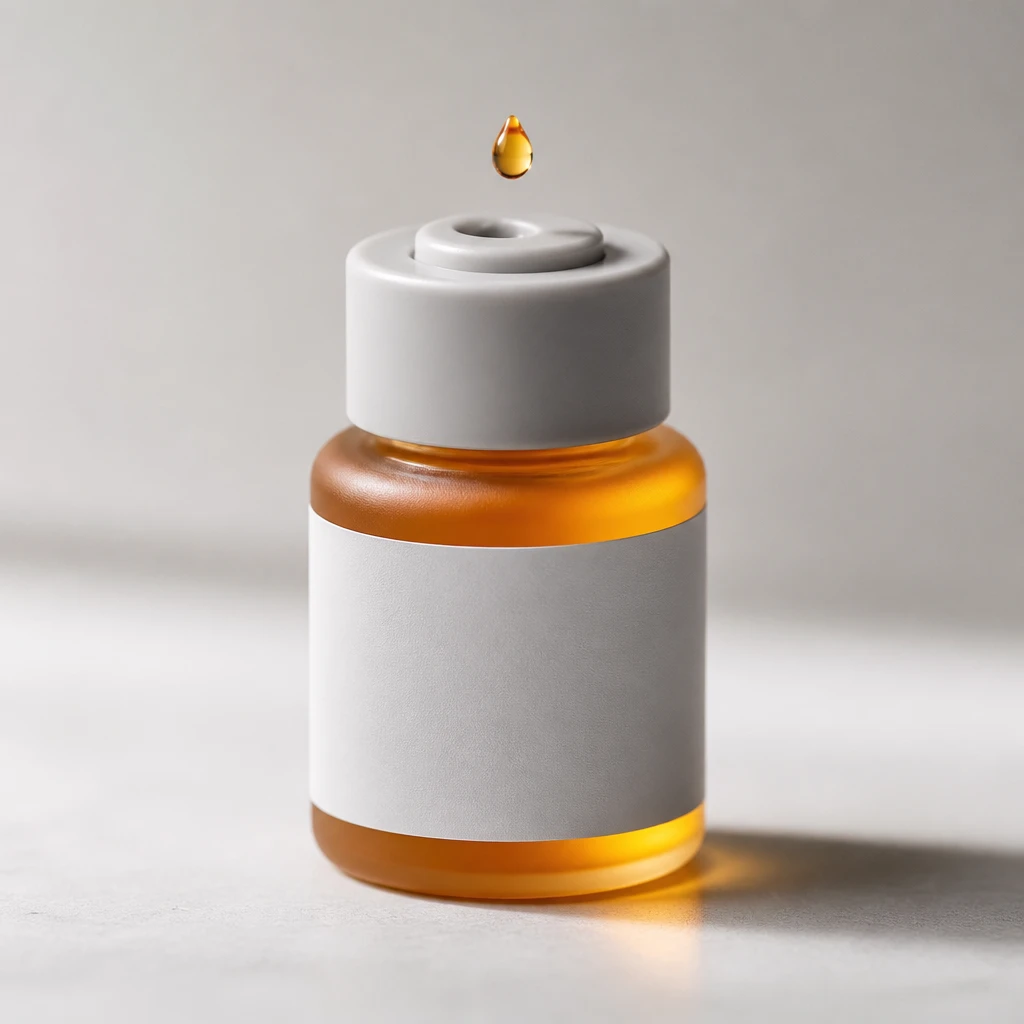
Why does liquid aromatherapy leak?Analysis of three common causes
Liquid aromatherapy leakage is essentially a problem of seal system failure. Regardless of the appearance of the aromatherapy bottle, leakage can be attributed to the following three physical causes.
Material and structure: the physical root of seal failure
Insufficient design of the bottle mouth sealing structureis the most basic and common cause. Between the mouth of the aromatherapy bottle and the cap, a sealing gasket or inner plug is relied upon to block the liquid pathway. If the gasket material is incompatible with the fragrance ingredients—for example, prolonged exposure to alcohol or solvents in the fragrance causes the gasket to swell, harden, or lose elasticity—the sealing performance will gradually degrade.
Another common issue is that the sealing structure has only one line of defense; once the gasket ages or is slightly misaligned during installation, liquid has an opportunity to escape.
Insufficient bottle material and structural strengthThis should not be overlooked either. If the bottle material softens at high temperatures, or if uneven wall thickness causes localized stress concentration, micro-cracks that are difficult to detect with the naked eye may form. These cracks may not be visible at room temperature, but once subjected to thermal expansion and contraction caused by temperature changes, they will gradually propagate and eventually form leakage channels.
Eco-friendly PP material is generally superior to ordinary PET or recycled materials in terms of temperature resistance and structural stability, but the specific performance still depends on the raw material grade and injection molding process.
Temperature Differences and Air Pressure: Special Challenges in Vehicle Environments
This is the core difference between car diffusers and desktop diffusers. After a car is exposed to the sun in summer, the temperature inside can rise significantly, while at night or in winter it can drop below freezing. This drastic temperature fluctuation brings two problems:
- Pressure changes: When the temperature rises, the air and fragrance vapor inside the bottle expand, causing the internal pressure to increase.If the bottle does not have a pressure relief design or the sealing structure cannot withstand positive pressure, the liquid will be "squeezed" out.
- Material fatigue: Repeated thermal expansion and contraction accelerates the aging of the sealing ring and bottle material, causing a previously qualified sealing system to gradually fail after several months.
Key points to judge: Confirm whether the product has undergone high and low temperature cycling tests in a vehicle environment, not just sealing tests at room temperature. For vehicle scenarios, this directly relates to the level of leakage risk.
Summary of this section: Leakage is not caused by a single factor, but is the result of the combined action of the sealing structure, material strength, and usage environment. For buyers, the most effective screening action is to request the supplier's seal material compatibility report and vehicle high and low temperature cycling test data. These two documents are more telling than any promotional rhetoric.
How can sealing design systematically avoid leakage risks?
The leakage problem of liquid fragrance is never a failure of a single link, but an outbreak of a weak point in the entire chain from the bottle mouth to the tank body. When evaluating an aromatherapy product, if a buyer only focuses on whether there is a sealing ring, it is easy to miss the details that truly determine the risk of leakage.
From the bottle mouth to the can body: the complete chain of sealing structure
A reliable sealing design needs to cover at least three links:
The first layer is the bottle mouth seal. This is the most vulnerable position for liquid aromatherapy to leak—bumps and internal pressure fluctuations caused by temperature changes will cause the liquid to find gaps at the bottle mouth and seep out. A common practice is a double structure of an inner plug and an outer cap. The inner plug blocks the liquid path, and the outer cap provides physical compression force.
To judge whether this layer is reliable, the key is to look at two details: whether the inner plug material has sufficient resilience (whether it can recover its shape after long-term compression), and whether there is any excessive play after the outer cap is tightened.
The second layer is the connection between the can body and the bottle mouth. Many leakage problems actually originate from the welding or tightening process at the bottle mouth and can body. If there are tiny stress concentration points at the connection, fatigue cracks may develop under high temperatures or long-term vibration.
This layer is difficult to judge with the naked eye, but it can be verified through a simple action—place the product upside down for 24 hours and observe whether liquid seeps out at the connection.
The third layer is the integrity of the can body itself. If the can body has thin-wall areas or residual internal stress, slight deformation may occur under temperature changes, which in turn can cause the bottle mouth seal to fail. This is also why material selection directly affects sealing reliability.
How Eco-Friendly PP Material Enhances Sealing Reliability
SOCELI liquid car air freshener uses eco-friendly PP material, and its contribution to sealing design is mainly reflected in two dimensions:
First, dimensional stability. PP material has a low coefficient of deformation under temperature changes, meaning that the can body is less likely to undergo significant deformation due to thermal expansion and contraction in summer heat or winter low temperatures. When the can body does not deform, the sealing ring at the bottle mouth can always remain in its designed working position, and will not be pulled out of place to create gaps due to deformation of the can body.
Second, chemical resistance. The fragrance components in liquid aromatherapy often contain a certain proportion of alcohol or ester solvents. If the can body material has insufficient tolerance to these components, prolonged contact may cause the material to swell or soften, thereby compromising the sealing structure. PP material exhibits good chemical inertness to most fragrance solvents and will not change its physical properties due to prolonged contact.
It should be noted that the material itself cannot solve all leakage problems on its own—it must be combined with reasonable structural design. SOCELI's dual sealing structure at the bottle mouth, consisting of an inner plug and a screw cap, combined with the dimensional stability of the PP can body, forms a complete anti-leakage solution.
Next, confirm the actions: If you are a brand procurement professional, it is recommended to conduct two tests during the sample stage: first, place the product in a constant temperature chamber at 50°C for 48 hours, then remove it and observe whether there are oil marks on the bottle mouth;Second, simulate a bumpy vehicle environment (can be done in the spin cycle of a washing machine), and after the test, check whether the seal remains intact. These two tests can help you verify whether the sealing design truly fits your transportation and usage scenarios.
In which scenarios must sealing performance be prioritized?In which scenarios do you not need to worry excessively?
Sealing performance for liquid aromatherapy is not a "have or have not" multiple-choice question, but rather a judgment question of "to what extent your usage environment will amplify the shortcomings of the seal." Below, we break it down by scenario.
High-temperature exposure and long-distance transportation: the rigid demand scenario for sealing
If your product will experience any of the following situations, sealing design is the top priority, not a 'bonus feature':
- Summer in-car exposure: In a closed car cabin, temperatures can reach 60-70°C under direct sunlight. When liquid fragrance is heated, the internal pressure rises. If the sealing structure fails, it can range from minor leakage that corrodes the interior to the fragrance liquid evaporating completely.What you need at this point is not just 'a lid', but a sealing structure that can withstand temperature variations.
- Long-distance transportation or bumpy roads: Continuous vibration causes the liquid to repeatedly impact the joint between the bottle mouth and the cap. If the sealing ring material is too hard or the structural design is unreasonable, the probability of fatigue failure will increase significantly.
- Warehousing and logistics: From the factory to the warehouse and then to the retail terminal, there may be multiple loading/unloading and temperature changes in between.If the packaging seal is insufficient, by the time it reaches the consumer, there may already be a drop in liquid level, directly affecting the unboxing experience.
For these scenarios, when confirming the product, the purchaser should focus on requesting from the supplierthe sealing test results under high-temperature environments, and clearly inquire about the working temperature range of the sealing ring material. SOCELI liquid car fragrance uses an environmentally friendly PP material tank. PP material itself has good tolerance to temperature changes, but whether it is sufficient for your specific transportation route and climate conditions needs to be confirmed based on your actual usage temperature range.
Indoor constant temperature environment: sealing risk is relatively controllable
If your usage scenario is indoor desktop, counter display, or air-conditioned constant temperature environment, the weight of sealing performance can be appropriately reduced. The reason is straightforward: stable temperature means the liquid expands and contracts minimally, and the absence of violent shaking means the stress on the bottle mouth seal is uniform, so the probability of seal failure is naturally lower.
In such scenarios, you should pay more attention todaily convenience—for example, whether the bottle is transparent for easy monitoring of remaining volume, whether the aroma liquid evaporates evenly, and whether refilling or replacement is convenient. SOCELI's transparent bottle design (120g content, approximately 90 days of use) is more valuable in such scenarios because you can visually check the remaining amount, avoiding the embarrassment of thinking there's still some left when it's actually empty.
One exception: Even in indoor environments, if your product is delivered to end customers via courier, the sealing risk during transportation still exists. In this case, you need to distinguish between the "usage scenario" and the "distribution scenario"—during use, there's no need for excessive worry, but during distribution, you still need to treat it with the same standards as essential requirements.
Checklist: Does your scenario require multi-level sealing?
| Judgment Dimension | High Sealing Requirement | Low Sealing Requirement |
| Operating Temperature | May exceed 40°C or have large temperature fluctuations | Constant temperature 20-30°C |
| Movement Status | In-vehicle, portable, frequently moved | Fixed placement, rarely moved |
| Circulation link | Requires express/logistics delivery | No delivery or direct vehicle transport |
| Consequences of failure | Leakage damages valuable items | Leakage only requires wiping and cleaning |
If all your scenarios fall on the right side, sealing performance does not need to be a core screening criterion;as long as any one item falls on the left side, you should include sealing design in the checklist that must be confirmed.
Next step to confirm: Provide the SOCELI team with your specific operating temperature range, transportation method, and whether express delivery is involved, and confirm whether the current product's sealing structure can cover your scenario boundaries—especially the two key variables of high-temperature limits and transportation vibration.
How can buyers verify the reliability of sealing design?
The leakage risk of liquid aromatherapy can be filtered out at the procurement stage for the most part. The question is:what to look for during the sample stage, how to verify during the batch stage, and under what circumstances the design must be changedBelow, we break down the procurement process step by step.
Four-Step Verification Method: From Samples to Test Reports
Step 1: Inversion and High-Temperature Dual Tests – First, Check the Physical Seal Limit
After receiving the sample, don't just smell the fragrance or look at the appearance. Perform two actions:
- Inversion Test: Completely invert the diffuser for 10 minutes and observe the bottle mouth, threads, and can body seams for any leakage.This action simulates transportation bumps and placement at any angle inside the car.
- High-temperature static test: Place the sample in a 50°C environment for more than 4 hours (after summer sun exposure, the temperature inside a car can reach 60-70°C).Immediately after removal, check whether the bottle body is deformed, whether the sealing ring has softened or shifted, and whether any liquid has leaked out.
If these two tests pass, it indicates that the basic sealing structure is sound. If the sample leaks when inverted, reject it directly without waiting for the test report.
Step 2: Check the type of sealing structure to determine whether it belongs to an "aging-prone design"
Open the bottle cap and observe the sealing method. There are three common types:
| Sealing Method | Reliability Characteristics | Procurement Concerns |
| Silicone/Rubber Sealing Ring | Good temperature resistance, strong resilience | Confirm whether the material is food-grade and resistant to aromatherapy solvent corrosion |
| Thread + Inner Plug | Simple structure, low cost | Whether the inner plug deforms and sealing performance degrades after repeated opening and closing |
| One-piece molded bottle mouth | No extra parts, minimal leak points | High process requirements, defect rate is key |
This SOCELI model uses eco-friendly PP material and an integrated body design, with sealing points concentrated at the bottle mouth threads and the inner plug fit. Key points to check during inspectionWhether the threads engage tightly and whether there is any wobble or gap after tightening。
Step 3: Request the sealing performance test report and verify the test conditions
Don't just look at the words "has a report". When requesting a seal test report from the supplier, verify three pieces of information:
- Test medium: Is it water or the actual aromatherapy liquid?Water and aromatherapy solvent have different permeability; passing a water test does not mean it won't leak with aromatherapy.
- Test temperature: Is it a room temperature test or a high temperature test?It's common for no leakage at room temperature but leakage at high temperatures.
- Test duration: Is it an instantaneous test or a continuous test?Whether the seal fatigues under sustained pressure requires time to verify.
If the supplier can only provide test data at room temperature, short duration, and pure water, it indicates that the sealing verification is insufficient, and additional test conditions are needed before making a judgment.
Step 4: Batch sampling inspection, don't use sample conclusions to cover the entire batch of goods
A qualified sample only means that the prototyping process is fine. During mass production, differences in seal material batches, injection molding temperature fluctuations, and inconsistent assembly torque can all affect sealing performance. It is recommended to conduct sampling inspection upon batch arrival according to Inspect 3-5 units from each batch and repeat the inversion and high-temperature tests.to confirm that the batch quality is consistent with the samples.
When should you request custom sealing from your supplier?
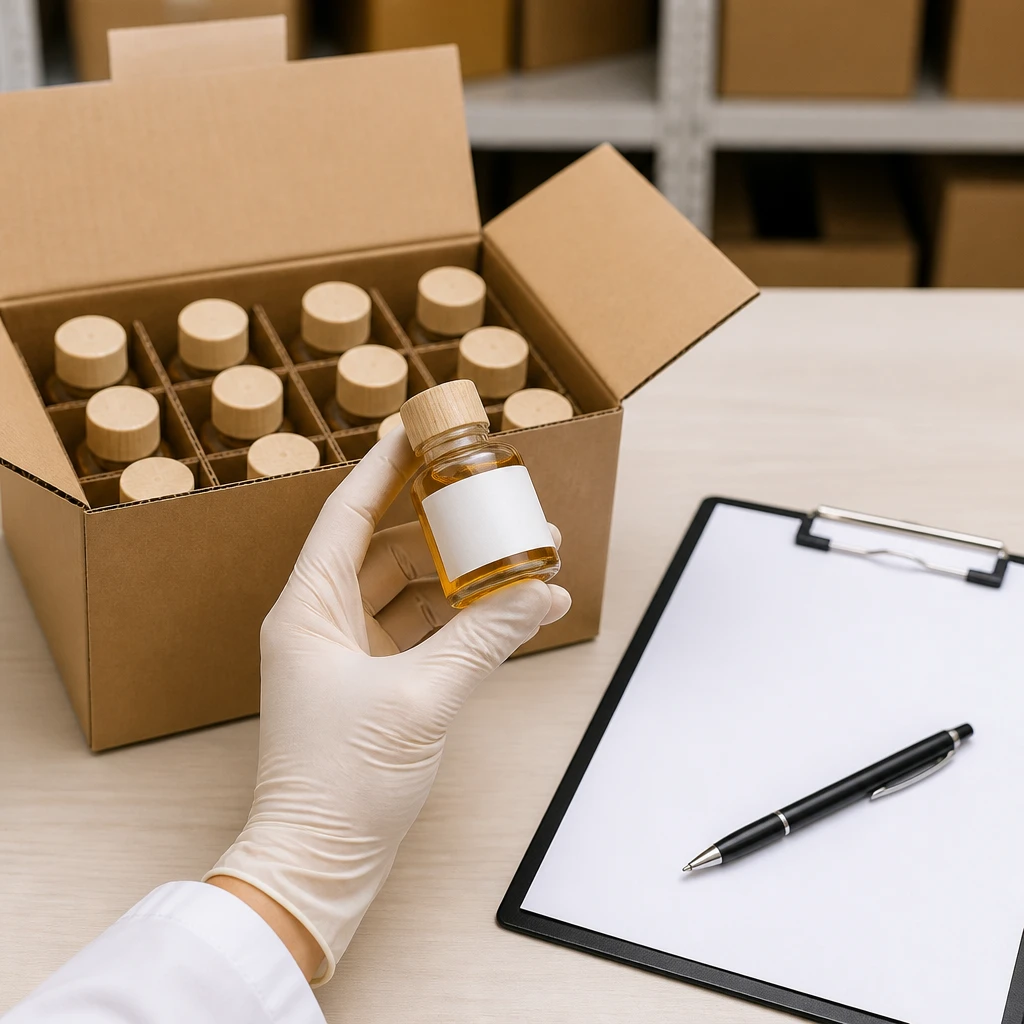 When should you request custom sealing from your supplier?
Not all purchases require custom seals. The criterion is simple:whether the existing solution poses a leakage risk in your application scenario.
In the following three situations, it is recommended to request customization:
- Extreme operating environments: If the product will be exposed to environments above 60°C for a long time (such as inside a car in summer in tropical regions, or on shelves under direct sunlight), it is necessary to confirm the high-temperature tolerance limit of the existing sealing material, and if necessary, replace it with a sealing ring of a higher temperature resistance grade.
- Fragrance contains special solvents: Some fragrance oils (such as high-concentration citrus and mint types) have a swelling effect on sealing materials.If you plan to use a fragrance containing such components, you need to have the supplier conduct sealing compatibility tests with the actual fragrance.
- Long transportation chain and multiple transshipments: In logistics chains involving export by sea or multiple transshipments, air pressure changes and vibrations can amplify sealing risks.In this case, it is necessary to confirm whether the packaging includes a leak-proof bag and whether the bottle mouth needs heat-shrink film reinforcement.
Conversely, if your usage scenario is indoor placement at room temperature, a short logistics chain, and conventional floral or woody fragrances,Existing sealing solutions are usually sufficient, so there is no need to add customization costs and lead times.。
Frequently Asked Questions
Q1: The sealing performance is good during sample testing, but individual leaks occur after batch delivery. How should this be handled? This is normal fluctuation in mass production. It is recommended to specify sampling inspection standards and a maximum defect rate in the procurement contract (for example, no more than 1 leak allowed out of 5 sampled units), and require the supplier to bear responsibility for returns or replacements for any excess.
SOCELI's own factory implements integrated management with a unified torque standard in the sealing assembly process, but after batch delivery, it is still recommended to conduct sampling inspection as described above.
Q2: The supplier says it has "passed international safety certifications." Does this mean the sealing performance is reliable? No. Safety certifications (such as food-grade material certification, REACH, etc.) primarily verify material safety and are not directly equivalent to sealing performance verification.
Sealing performance requires a separate test report; the two are different dimensions. Confirm them separately during inspection.
Q3: How much additional cost and time will custom sealing requirements incur? It depends on the extent of the changes. Simply changing the sealing ring material usually results in limited cost increase, but re-sampling and testing are required, and delivery time will increase by 1-2 weeks.
If the bottle mouth structure needs to be redesigned, both mold costs and delivery time will increase significantly. It is recommended to first confirm whether the existing solution truly does not meet the requirements before deciding on customization.
Q4: Is the sealing design of this SOCELI product suitable for high-temperature environments in vehicles? The product uses environmentally friendly PP material. PP has good temperature resistance among common plastics, and the product is positioned for in-car use. However, for extreme high temperatures after summer sun exposure, we recommend that you verify the sealing performance by conducting the high-temperature static test described above once you receive samples, to ensure it meets expectations under the temperature conditions in your actual usage area.
Learn More
If you are selecting liquid car fragrances for your brand or channel and wish to learn more about SOCELI's sealing design details or obtain samples for testing, please submit your usage scenarios and transportation conditions. Our team will assist you in confirming product suitability.
Related Products:SOCELI Liquid Car Fragrance