

Why is the car fragrance safety standard the first threshold for export procurement?
Where are the safety risks of car fragrances?
The usage environment of car fragrances is fundamentally different from that of home fragrances: they are placed in a sealed car cabin for a long time and experience high temperatures after summer sun exposure. The temperature inside a car under direct sunlight can far exceed normal room temperature, which imposes additional requirements on the container material, liquid formula, and evaporation mechanism of fragrance products.
Specific risks are concentrated in three aspects:
- Container stability under high temperatures: Inferior plastics may deform, release odors, or even cause fragrance liquid leakage under high temperatures, contaminating the car interior.
- Safety of the liquid formula: Whether the solvents and fragrances in the aroma liquid are stable at high temperatures and whether they produce harmful volatile substances directly affects the respiratory health of drivers and passengers.
- Uncontrolled evaporation rate: High temperatures accelerate liquid evaporation. If the product is not formulated for high-temperature environments, it may be used up in a few days or have an overly strong, pungent scent.
This is why 'high-temperature resistance' is not just marketing talk, but a fundamental safety attribute for car air fresheners.
What does regulatory compliance mean for brands?
For export-oriented purchasing decisions, safety standards are not a 'bonus point' but an 'entry ticket'. Different target markets have their own regulatory frameworks for air freshener products, involving ingredient declarations, labeling requirements, and test reports. Without compliance documents, products cannot clear customs or be listed, let alone be sold.
But for buyers, the value of compliance goes beyond customs clearance:
- Reduced recall risk: If a product that fails to meet safety standards causes problems in overseas markets, the recall costs and brand reputation damage far exceed the savings from procurement.
- Building channel trust: Overseas distributors and retail customers will prioritize filtering out suppliers without safety certification support when selecting products.Test reports and certification documents are the basic trust credentials at the negotiating table.
- Supporting brand premium: When your brand is willing to pay the cost for safety standards, end consumers feel that 'this brand is reliable,' which is more effective than any marketing copy.
In other words, safety standards address two issues simultaneously: whether the product can be sold in the market, and whether the brand can establish a foothold.
Next steps for confirmation: If you are evaluating the export suitability of SOCELI liquid car fragrance (model TS101), it is recommended to explicitly request the following information from the SOCELI team: the specific regulatory list for the target market (such as EU REACH, US CARB, etc.), the testing items and report scope the product has passed, and the temperature resistance limit of the environmentally friendly PP material at high temperatures and the corresponding test conditions. Only after confirming this information can you determine whether the product meets the requirements of your target market.
How do major global markets regulate car fragrances?— Analysis of three core frameworks
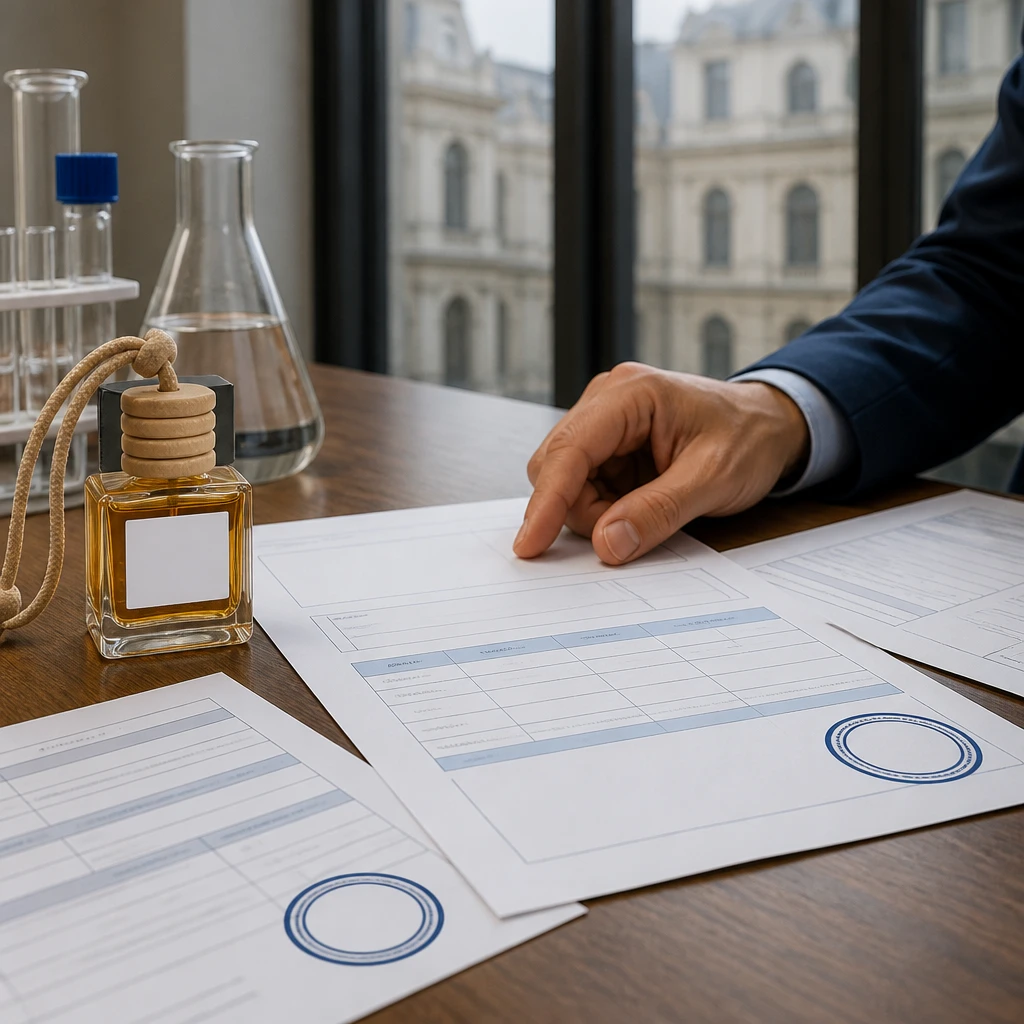 How do major global markets regulate car fragrances?— Analysis of three core frameworks
There is no unified "safety standard" for car fragrances globally. What brands and purchasers really need to understand when selecting products is: what different markets regulate, how they regulate, and what materials your product needs to prepare to prove compliance. Below, we break down the regulatory logic for the three core markets: the EU, the US, and China.
EU: How do REACH and CLP regulations affect aromatherapy formulations?
In the EU, regulation of car aromatherapy is not primarily about the 'aromatherapy' product category itself, but rather about the underlying attribute of 'chemicals'. The fragrances, solvents, and preservatives in car aromatherapy are all chemical substances and are therefore subject to two sets of regulations:
- REACH (Registration, Evaluation, Authorisation and Restriction of Chemicals): This governs the 'substance itself'.Every chemical substance used in an aromatherapy formulation must have a compliant identity under the REACH system.For buyers, the most direct verification action is to request from suppliersREACH compliance statement, confirming that the formulation does not contain restricted substances on the Candidate List of Substances of Very High Concern (SVHC).If the formulation uses new substances or substances in excess quantities, the supplier must complete registration before it can be legally sold.
- CLP (Classification, Labeling and Packaging Regulation): It governs "how to inform users of risks".If the aromatherapy formulation is classified into hazard classes such as flammable, skin sensitization, or aquatic toxicity, the product label must include the corresponding pictograms, signal words (e.g., "Warning" or "Danger"), and hazard statements.This means that when the same aromatherapy product is sold in the EU, the label may contain several more lines of warning information than when sold in China.
Key points for verification: The EU market does not require car air fresheners to have a "certification certificate," but it requires the entire supply chain to provide complete formula safety data (SDS safety data sheets) and REACH compliance documents. If a supplier says "we have EU certification," ask specifically whether it is a REACH registration number or a CLP classification report—the two address different issues.
United States: Key regulatory focuses of CPSC and California Proposition 65
The U.S. market has no single "national standard for car air fresheners," and regulation is dispersed across federal and state levels:
- CPSC (U.S. Consumer Product Safety Commission): It governs "product use safety."If a car air freshener contains liquid that may expand and leak at high temperatures, CPSC focuses on whether the container will crack after sun exposure, whether the liquid is flammable, and the risk of child ingestion.CPSC does not have a specific mandatory standard for air fresheners, but if a safety incident occurs, CPSC has the authority to recall the product.In practice, the purchaser should require the supplier to provideASTM F963 (Toy Safety Standard) or FHSA (Federal Hazardous Substances Act) compliance assessment, especially regarding container strength and label warnings.
- California Proposition 65: It governs "chemical exposure notification".This is the most easily overlooked "invisible threshold" in the U.S. market.Proposition 65 requires that if a product contains substances on its list that are carcinogenic or toxic to reproduction (such as certain phthalates, styrene), a warning must be provided on the label.Note: Proposition 65 does not prohibit use, but mandates disclosureHowever, many retailers (especially large California stores) will directly require suppliers to provide a California Proposition 65 compliance test report, otherwise the product will not be listed.
Key points for verificationWhen purchasing in the U.S. market, ask suppliers two questions: Has the product undergone California Proposition 65 screening? Has the container passed high-temperature pressure testing? If suppliers are vague on these two questions, the product will face significant resistance entering mainstream U.S. retail channels.
China: Relevant Standards and Regulatory Logic
In China, there is currently no specific national mandatory standard (GB) for car air fresheners, but several relevant standards are worth noting:
- GB/T 26516-2011 "Massage Essential Oil"Although named massage essential oil, it is often used as a reference standard for aromatic liquid products, covering basic indicators such as fragrance, color, and acid value.
- QB/T 4953-2016 "Fragrance": A light industry standard applicable to indoor fragrance products, with requirements for fragrance safety, evaporation rate, etc. Car air fresheners often refer to this standard.
- "Safety and Technical Standards for Cosmetics" (2015 Edition): If the aromatherapy product claims skin care or human contact functions, it must comply with this standard;However, pure car air fresheners generally do not involve this.
The regulatory logic of the Chinese market leans more towards "post-market random inspection" and "label compliance". Currently, there is no mandatory certification requirement, but e-commerce platforms (such as Tmall and JD.com) will require third-party test reports (usually chemical safety tests under GB/T or QB/T standards); otherwise, the product cannot be listed.
Key points for verification: To sell in the Chinese market, the key is to obtain aAromatherapy safety test report issued by a third-party testing agency(covering conventional items such as heavy metals, methanol, formaldehyde, etc.), and ensure that the label indicates the implementation standard number, production license number (if it falls under the cosmetics category), and precautions.
Comparison of Three Major Markets and Decision-Making Recommendations
| Market | Regulatory Core | Most Overlooked Aspect | Primary Verification Actions for Buyers |
| European Union | Chemical Substance Compliance (REACH+CLP) | Is the CLP label classification accurate? | Request REACH compliance declaration and SDS |
| United States | Product Safety (CPSC) + State-Level Notification (California Proposition 65) | California Proposition 65 substance screening | Confirm California Proposition 65 test report and container high-temperature testing |
| China | Industry standard reference + platform access | Third-party test reports and label implementation standards | Confirm that the test report covers routine safety items |
Key trade-offs: If your target market is the EU, compliance of formula ingredients is more important than product appearance and packaging;If it is the United States, container safety and California Proposition 65 screening are hard thresholds for entering mainstream channels;If you only target the Chinese market, test reports and label compliance can meet most platform requirements. SOCELI liquid car fragrance claims to be certified against international safety standards, but which specific items in the above markets are covered needs to be confirmed with the team regarding the scope of the test report—this directly determines which channels the product can enter, rather than the general conclusion of 'having certification'.
What characteristics should a compliant car diffuser have?— Taking SOCELI liquid car diffuser as an example
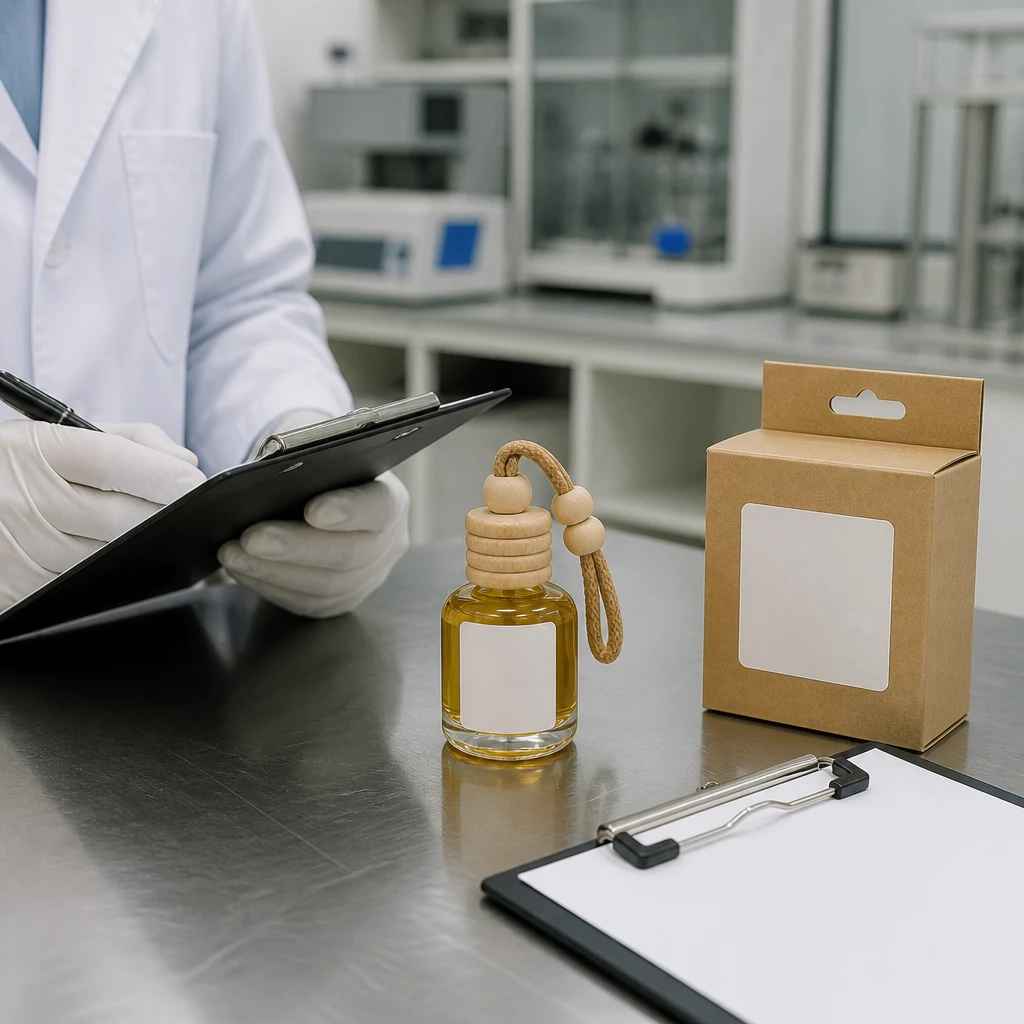 What characteristics should a compliant car diffuser have?— Taking SOCELI liquid car diffuser as an example
The previous article outlined the regulatory frameworks of major global markets, but when regulations are applied to specific products, what buyers really need to determine is:Will this diffuser deform, leak, or release harmful substances when placed in a car exposed to intense sunlight? The following breaks it down from three dimensions: material, formula, and design.
Material Safety: How Does Eco-Friendly PP Material Withstand High Temperatures?
The most special working condition for car diffusers isenclosed space + summer sun exposureThe temperature inside the car can reach above 70°C. SOCELI liquid car fragrance uses environmentally friendly PP (polypropylene) material, which has two key characteristics that buyers should pay attention to:
- Heat resistance: The heat distortion temperature of PP material is usually above 100°C, much higher than the extreme sun exposure temperature inside the car, so the shell is not easy to soften or deform under high temperatures.
- Chemical stability: PP has good tolerance to most solvents and fragrance ingredients, and will not react with the liquid fragrance, avoiding material precipitation or fragrance deterioration.
It should be noted that,"environmentally friendly" does not mean "high-temperature resistant"Environmental friendliness refers to the material being recyclable and free of harmful additives such as BPA, while high-temperature resistance depends on the PP grade and wall thickness design. SOCELI uses integrated injection molding, which reduces the risk of leakage at seams, which is especially important in high-temperature and high-pressure environments. If buyers need to verify, they can request the MSDS (Material Safety Data Sheet) of the material and high-temperature aging test reports.
Formulation and Certification: How does the health-safe formulation meet international requirements?
The compliance core of car air fresheners lies inthe fragrance ingredients and solvent carriers.。 SOCELI liquid air fresheners use a health-safe formulation that does not contain common plasticizers such as phthalates, which have been restricted or banned in some markets' regulations. At the same time, the formulation must meet the specific standards of the target market—for example, the EU REACH regulation for the registration, evaluation, authorization, and restriction of chemicals, or the California Proposition 65 disclosure requirements for specific hazardous substances.
Here is a point that buyers often overlook:Aromatherapy products have different compliance paths in different markets.。 Some markets regulate them as cosmetics (e.g., the EU), while others treat them as general consumer goods (e.g., the US), and the required testing items and report formats are completely different. SOCELI's own factory integrates management and can provide corresponding test reports for target markets, but buyers should clearly inform the sales team before placing an orderof the country/region where the product will ultimately be sold, so as to confirm whether the formula and labeling comply with local regulations.
What are the practical benefits of a visualized jar design?
The visualized jar may seem like a detail of user experience, but in fact it is directly related to compliance and procurement decisions:
- Transparent remaining amount: With a content of 120g and approximately 90 days of use, the visual design allows users to see the remaining amount at any time, avoiding the embarrassment of thinking there is still fragrance when it is actually empty, and also facilitating dealers in managing inventory and repurchase cycles.
- Leakage detectable: If the canister leaks, the transparent material allows for immediate detection and timely handling, reducing the risk of the fragrance liquid coming into contact with the car interior.
- Label compliance: The transparent canister, combined with exquisite label craftsmanship, allows for clear presentation of legally required information such as warning statements, ingredient lists, and production dates, avoiding compliance issues caused by blurred labels.
Who it suits and who it doesn't: If your procurement goal is for brands or distributors targeting high-temperature regional markets and needing to verify product safety, SOCELI's product has a verifiable compliance foundation in terms of materials and formulation. But if what you need isspecial certifications for specific markets(such as EU CLP classification labels, US CARB certification, etc.), be sure to confirm with the SOCELI team before placing an order whether existing test reports cover the target market requirements—this is a key step in determining whether the product can clear customs and be listed smoothly.
How to determine whether a car fragrance is suitable for your target market?—Procurement Checklist
 How to determine whether a car fragrance is suitable for your target market?—Procurement Checklist
As a brand owner purchasing or a distributor, what you face is not "Is this fragrance good?" but "Can it solve my customers' problems and pass my review?" Below are the judgment boundaries given in decision order.
In which cases can you choose directly?
If your business meets any of the following criteria, the SOCELI liquid car air freshener (TS101) can directly enter the sample testing stage without spending time comparing parameters horizontally:
- Your customers' complaints are concentrated on "short-lasting fragrance, no scent after a week"。The 120g content with 90-day endurance is the most direct answer to this product.If "longevity" is a high-frequency word in your channel feedback, this product is aligned with the core pain point.
- You need to quickly verify whether a custom fragrance can work。SOCELI supports OEM/ODM customization, and the sampling speed is fast.This means you don't need to stock up in large quantities before testing the market; you can judge fragrance acceptance at the sample stage.
- Your target market has clear requirements for material safety, but your procurement process requires suppliers to provide compliance documents firstThe product is made of environmentally friendly PP material and claims to have passed international safety standard certifications. Note that what you need to do here is to request the reports (see the checklist below) rather than guessing on your own.
- Your usage scenario involves high-temperature environments(such as exposure to sunlight inside a car during summer).The product design takes into account high-temperature resistance and is suitable for such environments.If your customers are concentrated in southern or tropical regions, this is a plus.
What situations require further confirmation?
In the following cases, it is not recommended to place an order directly; first complete the information and then decide:
- Your target market has a specific prohibited substances list for chemical components.(such as certain fragrance allergen restrictions in the EU, or limits on volatile organic compounds in specific regions).Although the product claims to meet international safety standards, the specific markets covered by "international standards" and whether they include your target country's regulations need to be clarified by the supplier, who should list the corresponding report numbers and testing scope.
- Your customers have no awareness of the "visualized remaining amount" and instead care more about the bottle size or installation method.The transparent container is a design feature of this product, but if your channel prioritizes concealed installation or specific clip methods, you need to confirm the physical dimensions and installation compatibility.
- Your procurement process requires suppliers to provide production qualifications rather than just finished product test reports.If you need to audit the factory's quality management system (such as ISO certification or factory audit reports), you need to confirm separately with the SOCELI team whether they can provide it, as this is not within the scope of the finished product specification.
- In your budget model, "custom packaging" accounts for a high proportion.。The product supports customization, but the depth of customization (label technology, packaging structure, MOQ tiers) directly affects the unit price.If your solution requires a complete redesign of the packaging rather than just a label change, you need to first confirm SOCELI's customization boundaries.
What supporting documents does the supplier need to provide?
Regardless of which category you fall into above, the following materials must be requested from the SOCELI team before making a procurement decision. If any one of them is missing, it means you are not yet able to give final endorsement to the 'safety' selling point:
- Safety test report: Require the report number, testing institution, testing standard name, and the specific test items covered (such as high-temperature stability, material migration, fragrance allergens, etc.).Do not accept vague statements like 'meets international standards'; you need to see which standard it corresponds to.
- Material certificate: Specific grade or supplier information for eco-friendly PP material, and whether it includes a statement on the proportion of recycled content.
- OEM/ODM Customization Scope Description: Which aspects can be customized (fragrance, label, packaging, capacity), minimum order quantity, sampling lead time, and who bears the cost.This determines your project timeline and cost model.
- Fragrance List and Corresponding Safety Descriptions: Among the 18+ fragrance types, are there any that cannot enter specific markets due to raw material restrictions.Confirm in advance to avoid being blocked by regulations during mass production after sample approval.
Frequently Asked Questions
Q: Can this product be sold directly to the EU or North American markets? A: The product claims to be certified to international safety standards, but different markets have varying requirements for fragrance ingredients and materials. You need to request specific test reports from the SOCELI team to confirm which standard is covered (e.g., REACH, FDA, or others), and then match them against your target market regulations to make a judgment.
Q: What is the sampling cycle and cost for custom fragrances? A: SOCELI supports rapid sampling, but the specific cycle depends on the complexity of the fragrance and whether you need to customize labels simultaneously. It is recommended to specify two scenarios when inquiring: 'fragrance adjustment only' and 'fragrance + packaging adjustment', and obtain the cycle and cost for each separately.
Q: Under what usage conditions was the 90-day battery life measured? A: Battery life is affected by usage frequency, ambient temperature, and the method of fragrance diffusion. If you are targeting long-distance drivers or users in high-temperature regions, it is recommended to confirm the test conditions with the supplier (such as daily usage duration and ambient temperature range) so that you can accurately convey them to end customers.
Q: What is the minimum order quantity? Are samples charged? A: The MOQ directly affects unit price and inventory pressure, and the sample policy affects your testing costs.
These two items need to be confirmed directly with the SOCELI team, as the MOQ threshold may vary depending on the depth of customization.
Q: If my customers feedback that the fragrance is too strong or too weak, can the concentration be adjusted? A: This falls under the category of formula customization. When confirming, you need to specify your desired adjustment direction (reduce/increase concentration) and target market preferences. The supplier needs to evaluate whether it can be adjusted within the existing formula system, and whether the adjustment will affect the longevity of the fragrance.
Learn More
If you are evaluating the export suitability of the SOCELI liquid car fragrance (TS101), please contact the SOCELI team to request detailed test reports, material certifications, and customization solutions.Submit your target market and procurement requirements, and we will assist you in confirming product compliance scope and sampling lead time.
Related Products:SOCELI Liquid Car Fragrance