
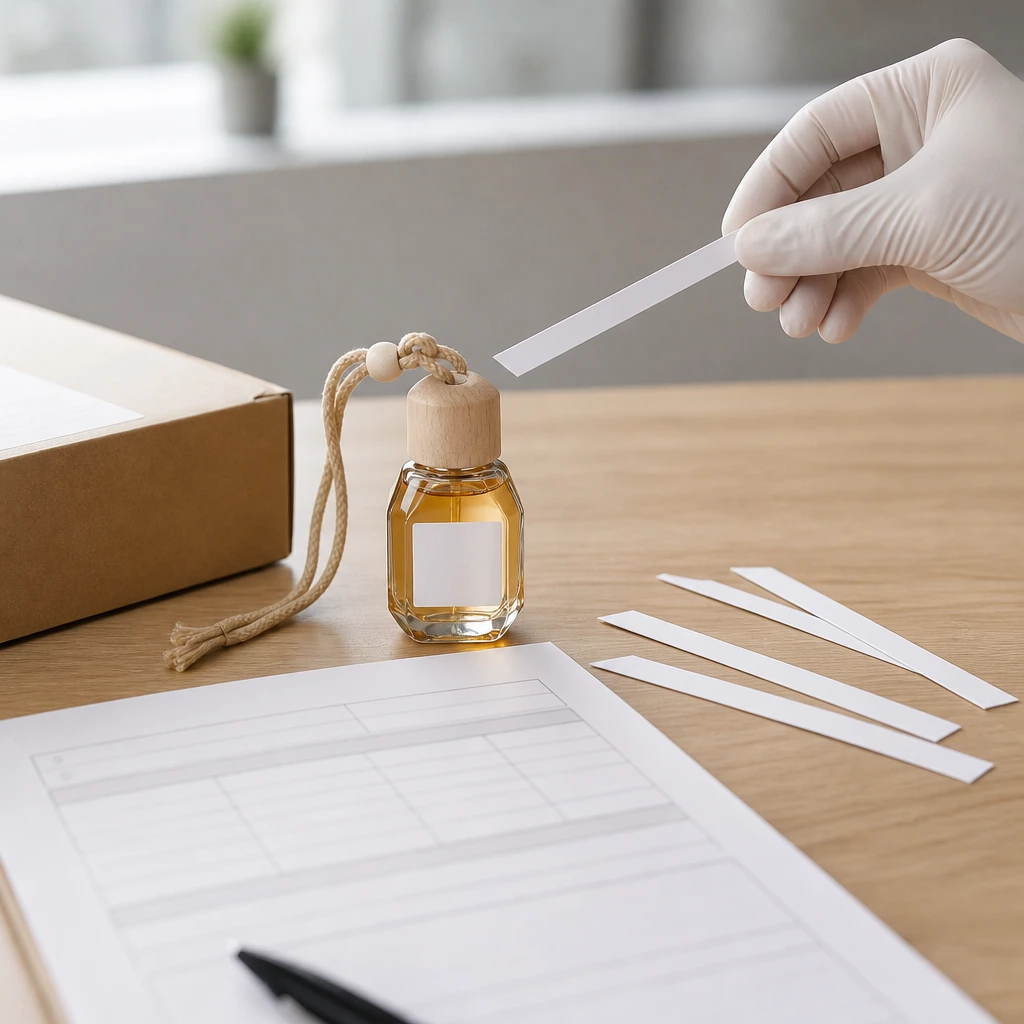
Before applying for a SOCELI sample, clarify these 3 questions first.
Sample testing is not as simple as 'taking one and smelling it.' For brand procurement and distributors, samples are one of the key verification methods before subsequent bulk cooperation. If the testing objectives are unclear, the samples will just sit on the table collecting dust after being sent back. Before applying for a SOCELI hanging glass bottle car diffuser (10ml) sample, think through the following three questions first.
Is your usage scenario new car odor removal, daily commuting, or brand customization?
These three scenarios have completely different verification focuses for the product, which directly determine what you should test after receiving the sample.
- New car odor removal: The core verification points are essential oil concentration and scent diffusion speed.SOCELI's product features a high-concentration plant-extracted pure oil-based essential oil. What you need to test is: after hanging it in the car, how long does it take for the fragrance to be noticeably felt covering the space?How many days can the masking effect on the smell of new car leather and adhesive last?It is recommended to test in a real new car environment, not in an office or at home.
- Daily commute: The core verification points are the longevity of the fragrance and whether the scent is pleasant.Can the fragrance release rhythm of the 10ml capacity with the wooden cap remain stable during 1-2 months of daily use?Will the fragrance be too strong in the first two weeks and almost imperceptible in the last two weeks?This type of testing requires continuous recording; it is recommended to arrange a usage period of at least 2-4 weeks.
- Brand Customization (OEM/ODM): The core verification points are material texture and customization space.SOCELI supports fragrance customization and logo customization. During the sample stage, what you need to confirm is: does the actual texture of the glass bottle and natural wooden cap match the brand tone?Can the label craftsmanship achieve the visual effect you want?The focus of this type of testing is not on the fragrance, but on the completeness of the product as a "brand carrier".
What core indicators do you focus on: safety certifications, longevity of the fragrance, or material texture?
Different roles have different focuses, but sample quantities are limited, so you must prioritize.
| Focus Indicators | Who should pay attention | How to verify during the sample stage |
| Safety certifications | For channel customers targeting maternal and infant products, sensitive populations, or those requiring compliance documents | Request certification documents from the SOCELI team to confirm which markets and standards are covered, rather than waiting until samples arrive to ask |
| Fragrance longevity | Distributors and retail customers, directly affecting repurchase and word-of-mouth | Conduct real usage tests, record daily fragrance perception, and do not judge based on first impression upon opening the box |
| Material texture | Brand customization clients, gift channels | Touch the glass bottle wall thickness, wooden cap texture, label feel, and take photos to compare with competitors. |
Key trade-offs: If budget and time only allow one round of testing, prioritize verifying your core sales selling point. For example, if you target health-conscious car owners, safety certifications are more worth confirming than fragrance longevity;if you go through the gift channel, material texture matters more than certification documents in closing deals.
How much budget and time do you plan to allocate for sample testing?
The sample itself may be free or low-cost, but the testing process carries hidden costs. If you plan to conduct a full scenario test (new car odor removal + daily commuting + custom sampling), you need to prepare at least 2-3 bottles of samples, a usage period of 2-4 weeks, and a simple recording method (such as taking a photo each week and noting your scent impressions). If it's just for initial screening, 1 bottle of sample and a 3-5 day quick experience is sufficient.
Next step confirmation action: Before applying for samples, write down the answers to the three questions above—usage scenario, core indicators, and testing period. Then contact the SOCELI team with these three answers, explain your testing plan, and confirm whether they can provide the corresponding quantity of samples and whether additional fees for custom sampling are required. Only with samples obtained this way can the test results truly support your purchasing decision.
How to conduct SOCELI sample testing?Focus on the three dimensions of safety, fragrance retention, and material quality.
After receiving the SOCELI T188 sample, it is recommended not to make a judgment based solely on whether it smells good. As a buyer or distributor, you need to use a reproducible method to verify three key dimensions: safety, fragrance retention, and material craftsmanship. The following explains each in order of testing priority.
Safety certification and formula: How to determine whether it is harmless to the health of vehicle occupants?
SOCELI T188 claims to use a healthy and safe formula, but at the sample stage you cannot directly verify the word "safe". You need to do two things:
First, request specific test reports from the SOCELI team. Note that it is not a general statement of "certified by international safety standards," but rather a requirement for the other party to specify: which standard was passed (such as REACH, MSDS, or specific fragrance safety regulations), the name of the testing institution, the report number, and the testing date. After obtaining the report, focus on two things: first, whether the content of heavy metals and plasticizers is within the limits; second, whether the fragrance raw materials are prohibited or restricted substances on the IFRA (International Fragrance Association) restricted list.
Second, conduct a simple enclosed car test. Hang the sample in the car, close the windows, and expose it to sunlight for 1-2 hours. Then enter the car to feel whether there is a pungent or chemical smell. This test simulates high-temperature summer conditions and can expose the problem of inferior fragrance releasing harmful gases at high temperatures.
If there is obvious discomfort at high temperatures, no matter what the report says, you should be cautious.
It should be added that if you plan to use this product for OEM/ODM private labeling, the applicability of safety certifications will vary depending on the target market. For example, the compliance requirements for exporting to the EU and Southeast Asia are different. In this regard, you need to confirm with the SOCELI team which markets' certification documents they can provide, and whether they can cooperate with you to complete the compliance filing for the target market.
Duration and concentration of fragrance: How to verify the actual performance of high-concentration plant-extracted pure oil-based essential oils?
"Ultra-long-lasting fragrance" is the selling point most prone to subjective bias. It is recommended to establish objective testing standards using the following methods:
Test environment and conditions: Choose a fixed vehicle and record the temperature and humidity on the test day. Hang the air freshener below the rearview mirror inside the car and record the start time. Enter the car at a fixed time each day (e.g., 9 a.m.), without turning on the air conditioning, and after sitting still for 1 minute, record the fragrance intensity (score on a scale of 1 to 5, with 3 being "clearly perceptible but not overpowering").
Continue recording until the fragrance intensity remains below level 2 for three consecutive days; that duration is the actual number of days the fragrance lasts.
Concentration assessment: Pure oil-based essential oils are characterized by even aroma diffusion and a non-irritating scent, and they do not have the strong initial burst followed by rapid decline within days that alcohol-based aromatherapy products exhibit. You can conduct a comparison test: open a SOCELI sample and a common commercial car aromatherapy product simultaneously, place them in two sealed containers of the same size, and sniff them every 24 hours to compare the aroma decay curves. Pure oil-based products typically show a 'slow and steady' decline rather than a cliff-like drop from strong to weak.
Clear boundaries need to be defined: The duration of scent retention is greatly affected by ambient temperature. High summer temperatures accelerate the evaporation of essential oils, while winter significantly prolongs it. Therefore, test results can only represent performance in your current season.
If you sell across multiple regions nationally or globally, we recommend asking the SOCELI team for their measured data under different climate conditions, or requesting reference values for evaporation rates at various temperatures.
What advantages do glass bottles and wooden caps have over plastic bottles?
The SOCELI T188 features a glass bottle body and natural wooden cap. This material choice should be verified from three angles during sample testing:
Chemical stability: Both glass and wood are inert materials that do not react chemically with essential oils. In contrast, some plastic materials (especially low-quality PP or PC) may swell, discolor, or even release microplastics or chemicals when in prolonged contact with high-concentration essential oils. You can perform a simple test: drop a small amount of essential oil on the inside of the cap and the inner wall of the bottle, let it sit for 48 hours, and then check for any discoloration, deformation, or odor.
High-temperature performance: In summer, the temperature inside a car exposed to direct sunlight can reach 60-70°C. Plastic bottles may deform or release odors at this temperature, while glass and wood are largely unaffected. During testing, you can place an empty bottle (with cap) in the car and expose it to sunlight for half a day, then check whether the cap has cracked or the bottle body shows any abnormalities.
Texture and brand premium: This directly affects your retail pricing space. The weighty feel of a glass bottle and the touch of a wooden cap cannot be replicated by plastic. Once you have the samples, it is recommended that team members not involved in the project do a blind touch and visual test, comparing them with similar plastic bottle products and recording their first impressions.
If your target customers are car owners who value interior texture or business reception scenarios, this difference is worth paying a higher procurement cost for.
What needs to be confirmed: The breakage rate of glass bottles during transportation is a key data point that you need to confirm with the SOCELI team. Intact sample packaging does not guarantee that bulk shipments will be free of breakage. Ask about their packaging solutions and breakage compensation policy, as this directly affects your overall costs.
How should the sample test results be evaluated?Which situations are suitable for continuing cooperation, and which require caution?
After receiving the sample of the SOCELI hanging glass bottle car fragrance (10ml), the test results will not be limited to just 'good' or 'bad'. What really needs to be determined is: whether this result matches your business model.
If the test meets the standards: which brand positioning and market strategies is SOCELI suitable for?
If your test feedback focuses on the following points, it indicates that the product matches your channel:
- Long-lasting fragrance is recognized: SOCELI focuses on high-concentration plant-extracted pure oil-based essential oils and ultra-long-lasting fragrance. If testers report 'there is still a noticeable scent after a week' rather than 'it fades after three days,' it means the core selling point is valid.It is suitable for brand positioning that emphasizes quality and is willing to pay a premium for experience.
- Appearance and texture are actively mentioned: The square glass bottle body and natural wooden cap are the visual memory points of this product.If during testing someone asks 'Can we put our logo on this bottle?' or 'Are there other colors available?' it indicates that the product has OEM/ODM expansion potential, making it suitable for distributors planning brand customization or co-branded gift boxes.
- Safety requires no additional explanation: The product emphasizes certification by international safety standards.If your test subjects are household users or people sensitive to chemical ingredients, and they have not reported any odor or discomfort, then the selling point of "healthy and safe formula" can be directly used as communication language in your channel without spending a lot of time on education.
Brand profiles suitable for continued cooperation: customer groups with clear visual tone requirements, willing to pay for the dual attribute of "aromatherapy as decoration," as well as distributors with their own channels who want exclusive fragrances or custom packaging.
Test results did not meet expectations: Is it a product problem or a testing method problem?
When sample feedback is not ideal, don't rush to negate the cooperation. In most cases, the problem lies in the testing method.
First, check the testing method:
- Is the test duration sufficient??If you only tested it for 2-3 days, the product may not have reached its optimal performance period yet.It is recommended to use it continuously for at least one week, and record the changes in fragrance concentration on days 1, 3, and 7.
- Whether the usage environment matches?This is a hanging glass bottle, suitable for cars, wardrobes, and small spaces.If you test it in an open large space, the fragrance diffusion effect will be greatly reduced. This is not a product defect, but a mismatch of scenarios.
- Whether the comparison benchmark is reasonable?If you compare the lasting time of a 10ml hanging product with a 50ml home reed diffuser, the conclusion is not meaningful.For a fair comparison, you should focus on the category of 'car hanging type'.
After confirming it is a product issue, then decide whether to continue:
It is recommended to cooperate cautiously in the following situations:
- Your channel mainly focuses on low-price, high-volume sales: SOCELI's glass bottle body and wooden cap determine that the cost is higher than ordinary plastic diffuser products.If your customer group is extremely price-sensitive, the premium space of this product will be difficult to support your gross profit requirements.
- You need rapidly iterating trendy fragrance types: If your channel needs to launch new products and chase hot fragrance types every month, while SOCELI focuses on a stable quality route with high-concentration pure oil base, the pace of both sides may not match.
- Your target market has restrictions on transportation or use of glass materials: The performance of glass bottles in terms of logistics damage rate and under certain specific scenarios (such as extreme high-temperature and sun exposure) needs to be evaluated in advance.: If seal or transportation damage issues have already occurred during testing, directly confirm with the SOCELI team whether the packaging solution can be adjusted.
: Next steps when test results are unsatisfactory:
: Do not give up directly, nor push hard. : Compile the specific issues encountered during testing (whether the fragrance is too faint, the scent duration is too short, or the appearance does not meet expectations) into a list, and confirm with the SOCELI team: whether the fragrance concentration can be adjusted, whether there are other options for the bottle craftsmanship, and whether the packaging can be reinforced for your logistics channel. : If clear answers and sample verification are obtained for these issues, then decide whether to proceed to the next round of cooperation.
: Key trade-off summary: SOCELI is suitable for brands and distributors that position "quality" and "safety" as selling points and are willing to pay a reasonable premium for product appearance. If your core competitive edge is extreme low pricing or ultra-fast product launches, this product is not the optimal choice. When test results are unsatisfactory, spend a day troubleshooting the testing method first, then confirm the matching solution with the SOCELI team with specific issues in hand—this is far more reliable than jumping to conclusions based on intuition.
From Samples to Bulk Collaboration: SOCELI's OEM/ODM Path and Next Steps
Passing sample testing means the product's fragrance diffusion, longevity, and appearance quality already meet your expectations. The next step is not to rush into ordering, but to advance from 'this product works' to 'this product can be delivered in bulk according to my brand standards.'
After sample confirmation, how do you proceed with logo customization, fragrance selection, and packaging design?
After passing sample testing, you should have a clear acceptance conclusion: which fragrance, what concentration, how long the scent lasts, and whether the bottle and label are satisfactory. With this conclusion in hand, the next step is to confirm three things with the SOCELI team:
1. Logo Customization Confirm your brand logo file format (AI, PDF, or PNG), color requirements, and printing process. SOCELI's label process supports fine printing, but different processes (hot stamping, silk screen, UV) have different impacts on pattern detail and batch cost. You need to send your design draft to the team to evaluate feasibility.
2. Fragrance Selection If you tested existing fragrances during the sample stage, you can directly lock them in for bulk production. If you need to adjust the concentration or develop new fragrances, this is part of the fragrance blending process and requires additional confirmation of sampling lead time and minimum order quantity. It is recommended to finalize the fragrance completely before bulk production to avoid rework after mass production.
3. Packaging Design In addition to the glass bottle and wooden cap of the product itself, it is also necessary to confirm the structure, material, and printing plan of the outer packaging (color box, gift box, shipping carton). If you are in the gift channel or brand collaboration business, this step is particularly critical—the outer packaging is often the customer's first impression of the brand.
What does integrated control of an in-house factory mean for bulk cooperation?
The practical benefits of SOCELI's integrated control of its in-house factory for bulk cooperation are concentrated in two points:
Controllable delivery time. Production, filling, and packaging are completed within the same system, reducing communication losses and handover waiting times in outsourced processes. For brands with clear launch timelines, this means more transparent production scheduling and lower risk of delays.
Stable quality. When the same factory controls raw material procurement, production processes, and quality inspection standards, it is easier to maintain consistency in fragrance, color, and longevity performance across batches. This is especially important for distributors and retail customers—you don't want the first batch and the second batch to smell like two different products.
Next Steps
Compile the acceptance conclusions you confirmed during the sampling stage (fragrance code, satisfaction with longevity, bottle/label feedback) into a brief requirements list, and send it directly to the SOCELI team along with your brand logo and estimated order quantity. They will provide a customized solution, minimum order quantity, and delivery time estimate based on your needs.
Please note: if you plan significant adjustments to the fragrance or if the packaging design is highly complex, it is recommended to reserve an extra round of sampling confirmation time before mass production, rather than squeezing it into the production schedule.
FAQ
Q: After the sample test passes, how long until mass production begins? It depends on the complexity of the customization. If it's just changing the logo without altering the fragrance or bottle shape, production can be scheduled relatively quickly after the design is confirmed.If it involves developing a new fragrance or changing the packaging structure, additional time should be reserved for sampling and confirmation.
For specific timelines, please provide your requirements list to the SOCELI team for confirmation.
Q: What is the difference between OEM and ODM, and what does SOCELI provide for each? OEM means you provide the design or formula requirements, and SOCELI produces according to your specifications.ODM means SOCELI makes customized adjustments based on existing products (such as the T188 hanging glass bottle car diffuser), such as changing the fragrance, modifying the label, or creating gift box packaging. Both are supported; which one to choose depends on the level of involvement you want in the product design.
Q: Is there a minimum order quantity for bulk orders? Yes. The MOQ varies depending on the customization content—the MOQ for label-only changes is usually lower than that for new fragrances or bottle modifications.
Share your estimated purchase quantity with the SOCELI team, and they will provide the corresponding MOQ thresholds and tiered pricing.
Q: Is there an additional fee for custom fragrances? If you choose from the existing fragrance library, there is usually no additional development fee;If you need to create a brand-new fragrance, it will involve fragrance development and sampling costs. For the specific fee structure, it is recommended to request a quotation from the SOCELI team during the requirements confirmation stage.
Q: How can we ensure that the quality of bulk orders is more consistent with the samples? SOCELI's own factory implements integrated management, with unified production processes and quality inspection standards. It is recommended to confirm key parameters such as fragrance number, concentration ratio, bottle specifications, and label craftsmanship in writing with the team before bulk production, and to request pre-production samples for confirmation before mass production.
Learn More
If you have already clarified the usage scenario, core indicators, and testing cycle, feel free to contact the SOCELI team to request samples, or directly submit your requirements list to obtain a customized solution and minimum order quantity information.
Related Products:SOCELI Hanging Glass Bottle Car Diffuser (10ml)