
Is car aromatherapy safe?The answer lies in four key stages of the production process.
When purchasing car aromatherapy, the first thing you confirm is often not the fragrance, but safety. This is reasonable—the car interior is small, temperature fluctuations are large, and aromatherapy products come into direct contact with the air, so safety should indeed be the top priority.
But 'safety' is not a vague concept; it is determined by four specific stages:raw material selection, formula blending, filling production, and quality control testing.。 If any stage goes out of control, the final product may have problems. For example, if the raw material purity is insufficient, it may release unpleasant odors at high temperatures;Poor sealing during filling may lead to leakage during transportation;Vague quality control standards result in significant quality fluctuations between batches.
These issues cannot be detected by appearance or marketing; they can only be controlled through the production process.
Why does the production process determine the safety of car air fresheners?
Because the usage environment of car air fresheners is more demanding than that of household air fresheners. In summer, the temperature inside a car can exceed 60°C under direct sunlight, and inferior fragrances or solvents may accelerate evaporation or deterioration at high temperatures. If the production process lacks verification of high-temperature resistance, the product's performance in extreme scenarios becomes uncontrollable.
Conversely, a strictly controlled production process can eliminate these hidden dangers before shipment, rather than exposing problems only after consumer use.
How does SOCELI ensure consistent quality through integrated management?
SOCELI adopts an integrated management model with its own factory, completing all processes from raw material intake to finished product shipment within the same system. This means raw material batches are traceable, formula execution follows unified standards, and the filling process is controlled, rather than outsourcing key steps to different suppliers, which could lead to divided responsibilities and inconsistent standards.
For buyers, the practical value of integrated management isverifiable consistency.。 Every sample and bulk order you receive is produced under the same set of standards, not 'meticulous samples but hit-or-miss mass production.' If you need custom fragrances for your brand, this management model also means smoother transitions between formula adjustments, sampling, and mass production, without information loss due to multiple intermediate steps.
Next step: confirmation actions.: If you are evaluating the safety of SOCELI liquid car fragrance (model TS101), it is recommended to directly request the raw material list and high-temperature stability test conditions for this model from the SOCELI team, and confirm whether the test temperature range covers the extreme climate scenarios of your target market. At the same time, specify your target sales regions, and the team can confirm whether the product meets local specific requirements for car fragrances.
From raw materials to formulation: How do eco-friendly PP material and healthy and safe formulation ensure high-temperature safety?
When purchasing car fragrances, high-temperature safety is often a higher priority than the fragrance itself. In summer, when the car is closed and exposed to the sun, the dashboard temperature can exceed 70°C. Ordinary plastics may deform and release odors at high temperatures, and the stability of the fragrance liquid formulation is directly related to whether harmful substances are produced at high temperatures. SOCELI liquid car fragrance has made targeted treatments in these two aspects.
Why is eco-friendly PP material more suitable for high-temperature environments in cars than ordinary plastics?
PP (polypropylene) has heat resistance in the first tier among common plastics, with a heat distortion temperature typically above 100°C, far higher than the actual temperature after exposure to the sun in a car. This means that in high-temperature summer scenarios, the PP material housing will not undergo structural softening or deformation, and the aroma diffuser container can maintain a complete seal, avoiding liquid leakage.
In contrast, ordinary plastics (such as PS, PVC) are more prone to deformation at high temperatures, and may even release characteristic odors that mix with the fragrance itself, undermining the user experience. SOCELI's choice of eco-friendly PP material addresses not only the issue of heat resistance but also avoids the problems of surface stickiness and brittleness that occur after high-temperature aging of ordinary plastics—this is especially important for long-term use over 90 days, as the container needs to maintain structural stability throughout the entire lifespan.
How does the health and safety formula avoid releasing harmful substances after exposure to high temperatures?
The challenge for the aroma formula under high temperatures is whether the fragrance and solvents will decompose or oxidize when heated, producing irritating substances such as aldehydes. The core logic of SOCELI's health and safety formula is to select fragrance raw materials and solvent systems with better thermal stability, so that the formula remains chemically inert under high-temperature environments and does not change its component structure due to temperature increases.
For buyers, there is a key point that needs to be confirmed with the SOCELI team:Which international safety standards have been specifically passed?(such as IFRA, REACH, etc.), and whether the test report includes substance release tests under high-temperature conditions. If the test report only covers normal temperature usage scenarios, it is recommended to request additional component analysis data after high-temperature aging to confirm the safety of the formula under extreme conditions.
What is the relationship between the 120g large capacity and the 90-day battery life?
These two factors are indirectly but importantly related to high-temperature safety. The 120g large capacity design means that the ratio of evaporation area to container space of the aromatherapy liquid is more reasonable, providing more buffer space for liquid expansion at high temperatures, reducing the risk of seal compression and leakage. At the same time, the 90-day battery life means the product needs to withstand repeated high and low temperature cycles over a long period (sun exposure during the day, cooling at night), which places higher demands on material fatigue and formula stability compared to short-term products.
In other words,large capacity + long battery life is itself a stress test for the reliability of materials and formula.—If the PP material or formula is not resistant to high temperatures, it will be difficult for the product to maintain stable performance within a 90-day cycle.
Next step: confirmation actions.: Request from the SOCELI team the heat resistance parameters (heat deflection temperature) of the PP material and the formula safety test report, and explicitly ask whether the tests cover high-temperature sun exposure scenarios. If your usage environment involves extreme high temperatures (such as tropical regions or long-term outdoor parking), it is recommended to also request samples for actual sun exposure tests to observe any odor or appearance changes.
Filling, Sealing, and Inspection: Which Steps Determine Product Consistency and Durability?
For liquid products like car air fresheners, the most direct complaints from consumers are often not about the fragrance being unpleasant, but about leakage, drying out, or two bottles smelling different. These three issues all originate from the filling, sealing, and inspection steps on the production side. As a buyer, you don't need to understand production line operations, but you do need to know what to ask the factory and what to look for.
How do filling and sealing processes prevent liquid leakage?
There are three main risk points for liquid leakage: whether the filling volume is accurate, whether the bottle cap seal is reliable, and whether the sealing material is temperature-resistant.
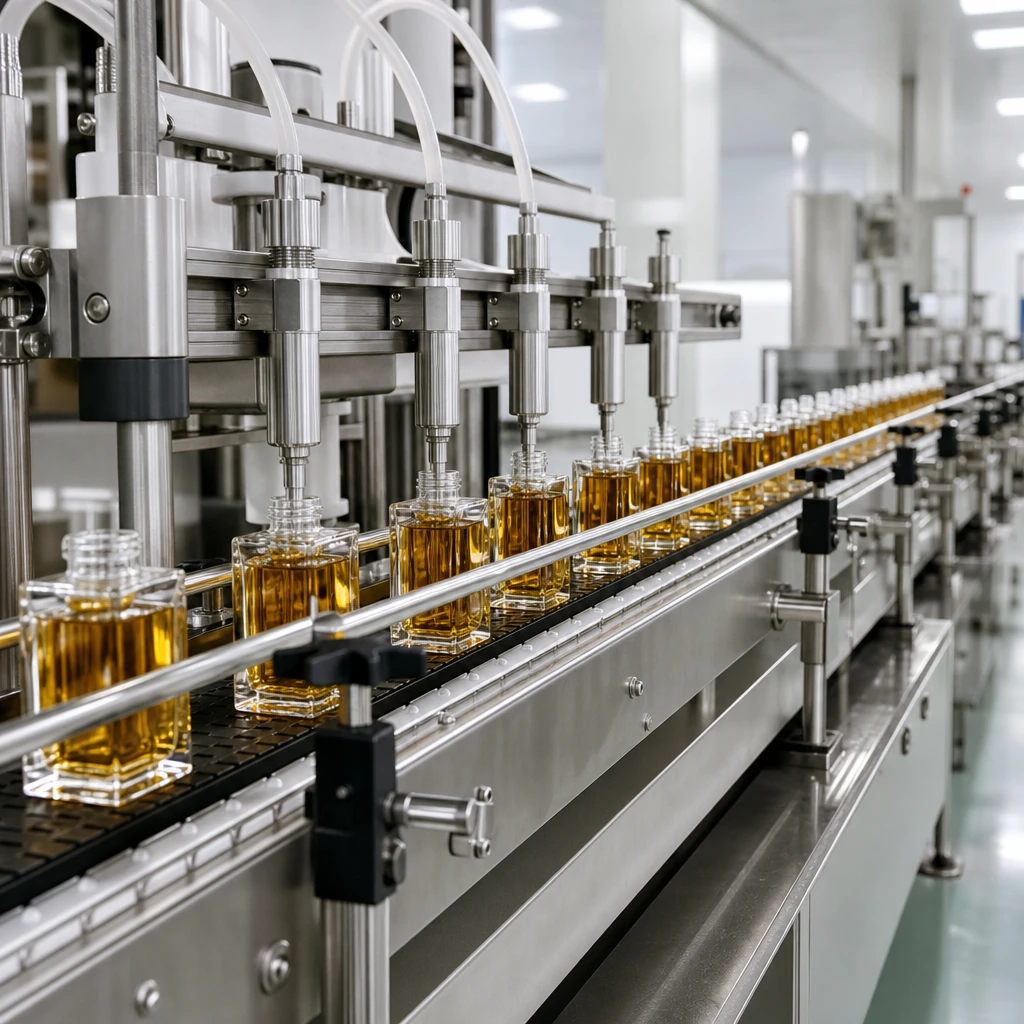
Filling volumeDirectly related to consistency. If the filling volume fluctuates greatly, some bottles in the same batch may be overfilled and some underfilled, which not only affects the single-bottle duration but also makes retail customers feel that the quality is unstable. A reliable approach is for the factory to use automated filling equipment with weight detection, rather than manual visual inspection.
Sealing structureIs the core of leak prevention. Car aromatherapy is exposed to high temperatures inside the vehicle for a long time. In summer, under direct sunlight, the temperature inside the car can exceed 60°C, and the liquid expands when heated, increasing the pressure inside the bottle. If the sealing ring material has insufficient temperature resistance or the sealing structure design is unreasonable, leakage may occur at high temperatures.
SOCELI's product uses an eco-friendly PP material bottle body. PP itself has good heat resistance, but what truly determines whether leakage occurs is the sealing fit between the bottle mouth and the cap, as well as the material grade of the sealing ring (if any).
You can confirm this byrequesting the sealing test records under high-temperature conditions from the factory, or directly asking for a simulated sun exposure test—place the sample in a 60-70°C environment for several hours and observe whether leakage occurs. This action is more effective than any marketing talk.
How does factory inspection ensure consistent quality for each batch of products?
The purpose of factory inspection is not to 'catch all problems,' but to stop defective products before they leave the factory, while also using data feedback to allow the production line to make timely adjustments. For the buyer, the key is to understand whether the following three types of inspections are covered:
- Filling volume sampling inspection: Randomly select samples from each batch for weighing to confirm that the net content is within the allowable error range.What is the error standard and how often are inspections conducted? The factory should have records of this data for reference.
- Seal integrity test: Common methods include inversion test, squeeze test, or air tightness detection.The inversion test involves placing the finished product upside down for a period of time to observe whether there is leakage. This is the most intuitive and one of the most likely to be requested for on-site demonstration.
- Appearance and label inspection: Check for scratches on the bottle body, whether the label is affixed straight, and whether the printing is clear.This type of issue does not affect functionality, but it directly impacts the retail shelf image. Especially for brand owners, label craftsmanship is part of brand perception.
Batch consistencyThe key to batch consistency lies in whether the factory has established a sample retention system and a batch traceability system. Simply put: Does the factory retain samples from each batch of shipped products? If a customer reports a problem with a certain batch, can the factory trace back to the filling date, raw material batch, and inspection records via the batch number?
If both of these points are achievable, it indicates that quality control is a closed loop.
Your next confirmation steps
As a buyer, you don't need to personally audit the factory to make a judgment, but you should at least complete two tasks during the sampling stage:
- The factory inspection report for this batch must be provided with the samples.Focus on the filling volume tolerance range and the sealing test items.
- Conduct your own high-temperature static test:Place the samples in a car or a constant-temperature chamber at approximately 60°C for 48 hours, and observe for any leakage or significant changes in fragrance concentration.
If the factory can provide the inspection report and the samples pass the high-temperature test, you can be largely assured of consistency and durability. If the other party cannot provide inspection records, you need to confirm with the SOCELI team which items the current inspection process covers and whether they can provide batch inspection reports for your order—this directly affects whether the quality standards you promise to retail customers are credible.
How can you determine whether a production line is trustworthy?Three verification methods for buyers
When purchasing car air fresheners, the biggest fear is not that the price cannot be agreed upon, but that safety issues, unsatisfactory fragrance retention, or significant quality fluctuations between batches are discovered only after the goods arrive. Rather than listening to the supplier's verbal promises, it is better to directly verify using the following three methods.
Method 1: Verify safety certifications and test reports
Car air fresheners are exposed to high temperatures and direct sunlight for long periods, so the safety baseline is 'no leakage and no release of harmful substances under high temperatures'. When verifying, do not just listen to the other party saying 'we have certification'; instead, confirm three things:
- The scope of certification coverage: Is it certification for the entire product or only for the raw materials?Does the certification body have internationally recognized qualifications?
- Timeliness of the test report: Is the report still within its validity period?Does the submitted sample match the current production batch?
- Test items corresponding to materials and formulations: Has the eco-friendly PP material undergone high-temperature migration testing?Has the fragrance passed the IFRA (International Fragrance Association) safety standards?
If the supplier can provide all the above complete documents, it indicates that their production process can withstand third-party supervision. If they can only verbally assure that they "meet the standards," it is recommended to directly request the report number or a copy before proceeding to the next step.
Method 2: Examine the factory's integrated management and control capabilities.
The quality stability of car fragrances depends on whether raw materials, blending, filling, and testing are completed within the same management and control system. The more outsourcing steps there are, the greater the quality control risk.
During the inspection, focus on three key questions:
- Is the fragrance blending done in the factory's own facility? If fragrances are purchased externally and only filling is done, it is difficult to ensure consistent scent performance and batch consistency.
- Are filling and sealing automated? Manual filling can lead to volume deviations and inadequate sealing, increasing the risk of leakage at high temperatures.
- Is each batch tested before shipment? At a minimum, it should include a seal test and a high-temperature resistance test, rather than 'random inspection' or 'exemption from inspection'.
Taking SOCELI as an example, its own factory's integrated management covers the entire process from raw materials to finished products, supporting rapid prototyping, which means that buyers can verify the actual level of the production line through samples before placing bulk orders.
Method 3: Verify fragrance retention and high-temperature resistance through samples
Documents can be falsified, but samples will not. After applying for samples, do not just smell them in the office; it is recommended to conduct two targeted tests:
- High-temperature resistance test: Place the sample in an environment above 60°C (simulating the temperature inside a car after summer sun exposure) for 4-8 hours, and observe whether there is deformation, leakage, or a drastic change in fragrance.
- Long-lasting fragrance retention test: Use continuously in an enclosed space and record the number of days from strong fragrance to noticeable weakening.SOCELI liquid car air freshener claims a 90-day endurance, and in actual testing it should achieve at least 80% of the stated duration to be considered qualified.
Situations suitable for directly entering the sampling/customization stage: You already have a clear preference for fragrance type, target price, and packaging requirements, and the supplier can provide complete safety documents.
Situations that require further observation: You are not yet sure about the target users' preferred fragrance type, or you do not have clear expectations for high-temperature resistance standards—in this case, first request samples for internal testing before deciding whether to proceed with bulk cooperation.
Frequently Asked Questions
Q1: Can the test reports for SOCELI liquid car fragrance be provided to the buyer? Yes. Buyers can request to view relevant safety certifications and test reports from our team during the evaluation stage to confirm the coverage of tests for materials, fragrance, and finished products.
Q2: After applying for samples, can I specify the fragrance type for testing? Yes. SOCELI offers a library of 18+ fragrance types. When applying for samples, you can specify 2-3 target fragrances to compare longevity and scent acceptance.
Q3: For bulk customization, what are the minimum order quantity and sampling lead time? The specific MOQ depends on the customization content (fragrance, label, packaging), and the sampling lead time typically starts quickly after confirming requirements. It is recommended to consult the team directly and provide your target specifications to get an accurate solution.
Q4: What should be done if testing reveals that the fragrance retention time is less than 90 days? The fragrance retention duration is significantly affected by the usage environment (temperature, ventilation frequency). If the test results differ significantly from the stated specifications, it is recommended to first confirm whether the test conditions simulate real usage scenarios, and then communicate with our team regarding formula adjustment solutions.
Learn More
If you are evaluating procurement or customization needs for car air fresheners, please feel free to contact the SOCELI team to request samples, test reports, or further technical parameters.We can assist in confirming product suitability based on your target market and usage scenarios.
Related Products:SOCELI Liquid Car Air Freshener